Can Room Decor Colorful Themes Work in Small Apartments

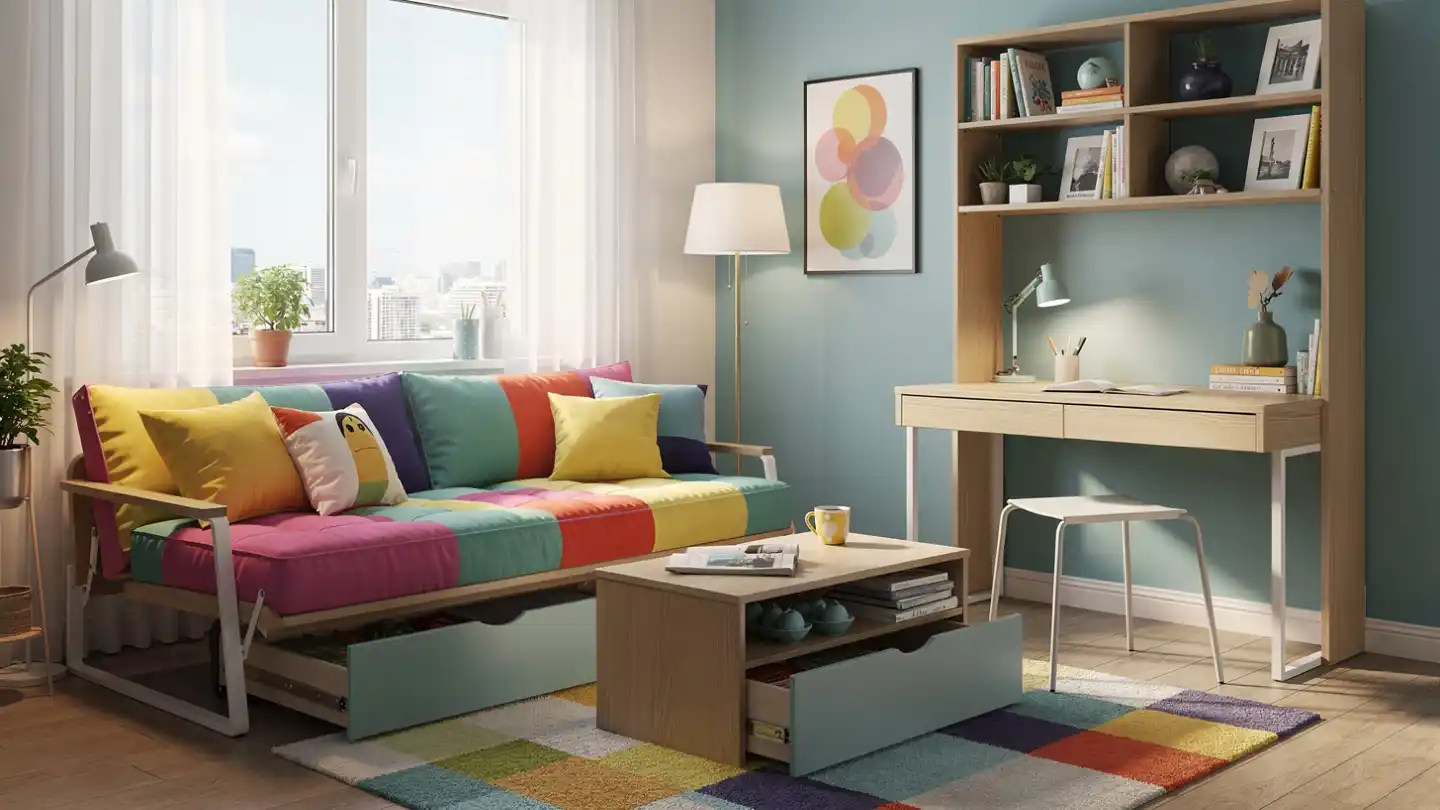
The interior design rulebook of the 2010s lied to you. You do not need to sentence your compact home to a lifetime of sterile, hospital-white minimalism just to make it feel breathable.
Many tiny-home dwellers crave vibrant self-expression but dread the visual claustrophobia commonly blamed on bold palettes.
You face a real paradox. You either settle for a boring, washed-out rental or you risk turning your home into a chaotic, eye-straining sensory overload.
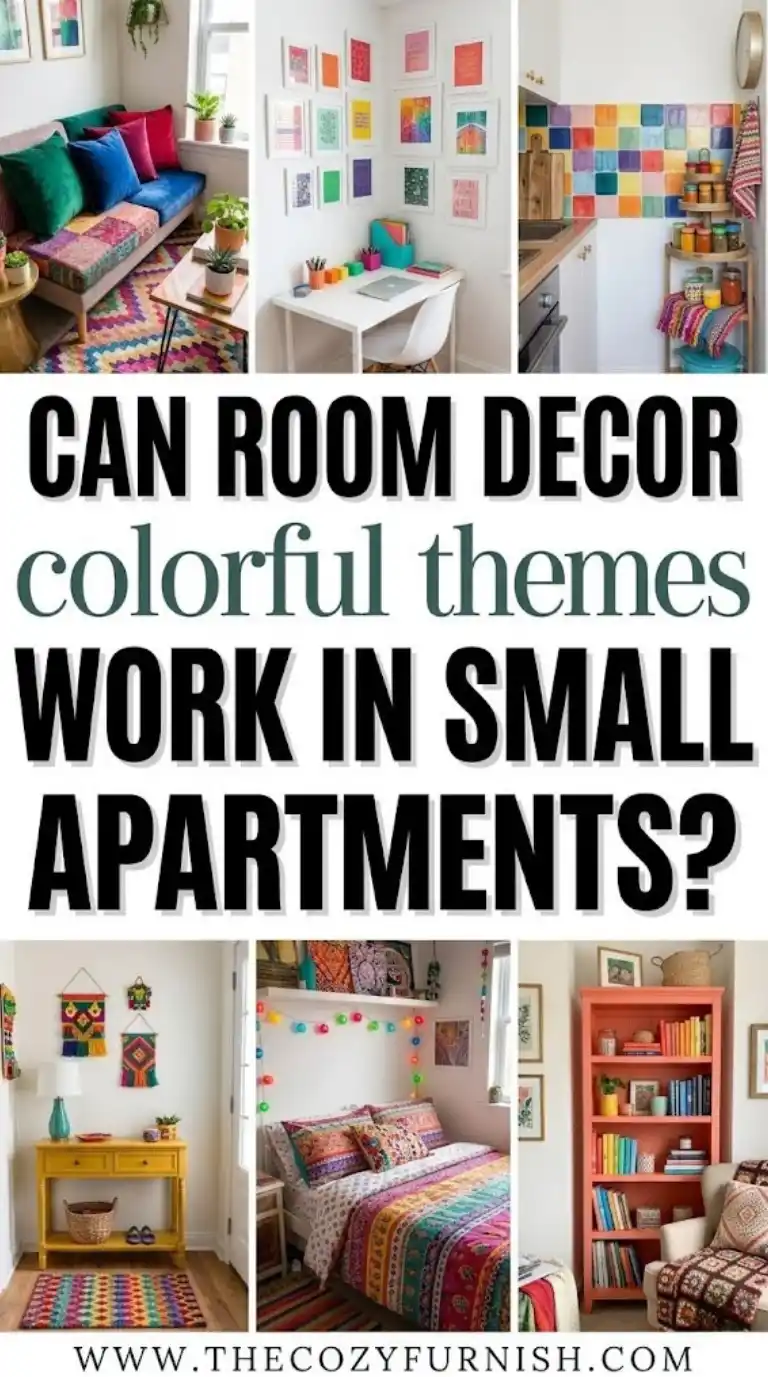
But can room decor colorful themes work in small apartments without ruining the space? Yes, they can.
This guide delivers concrete, data-backed design frameworks proving how real decorators execute high-impact palettes in tight square footage.
You will master structural techniques like color drenching, smart scaling, and textural leveling to make bold color palettes for small spaces work flawlessly.
Here is how to create a gorgeous, maximalist small apartment decor scheme that feels open and sophisticated.
The Spatial Science Behind Color in Compact Rooms
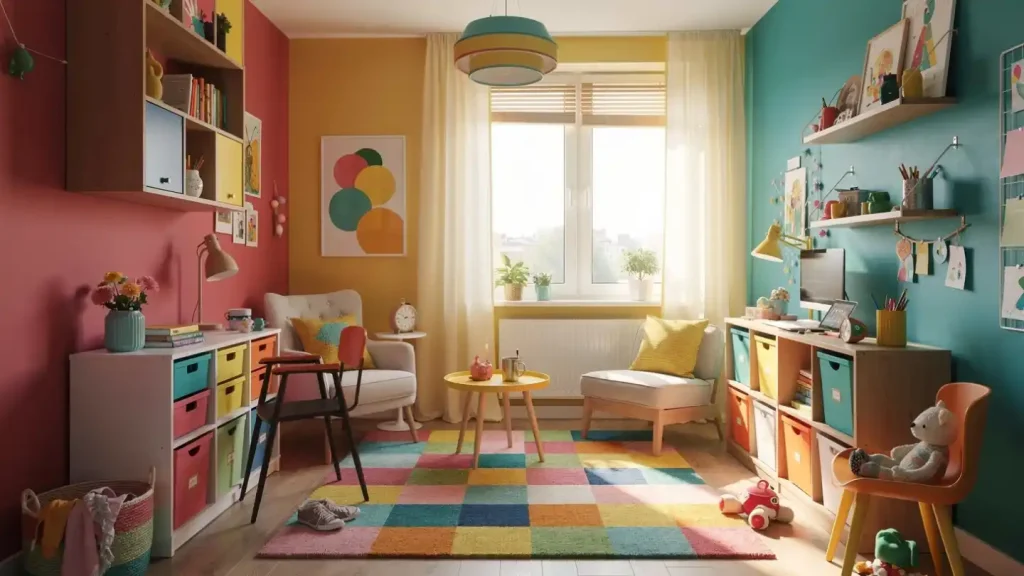
The idea that small rooms require stark white paint is an outdated myth that ignores real spatial physics. Many people default to white because they think it expands a room. That part trips everyone up. Here is why that fails.
Unfiltered minimalist white in a dark room turns into a sad, dingy institutional grey. If your apartment lacks massive windows, white walls look flat and shadowy because they have no light to reflect.
Deep, saturated jewel tones obscure the crisp lines where walls intersect. Dark colors absorb light, which actually tricks the eye into seeing an uninterrupted, flowing vertical plane.
Recent color data shows that standard cool greys are declining fast. People are shifting toward rich, saturated hues over default neutrals. Saturated colors erase boundaries where walls meet corners, which pushes the walls back visually.
High-contrast zoning creates clear focal points instead of chaotic scattered color. When you apply deep colors across entire architectural surfaces, you give the eye a structured path to follow.
To make this optical depth effect work for you, you must change how you apply the paint structurally.
How to Master Color Drenching in Tight Spaces
Color drenching is the ultimate design weapon for tiny spaces. It involves coating your walls, baseboards, doors, trim, and ceilings in one continuous, saturated hue.
When a door frame or ceiling is left bright white against a rich wall, it chops the room into tiny blocks. This visual interruption forces your brain to register the exact small boundaries of the room.
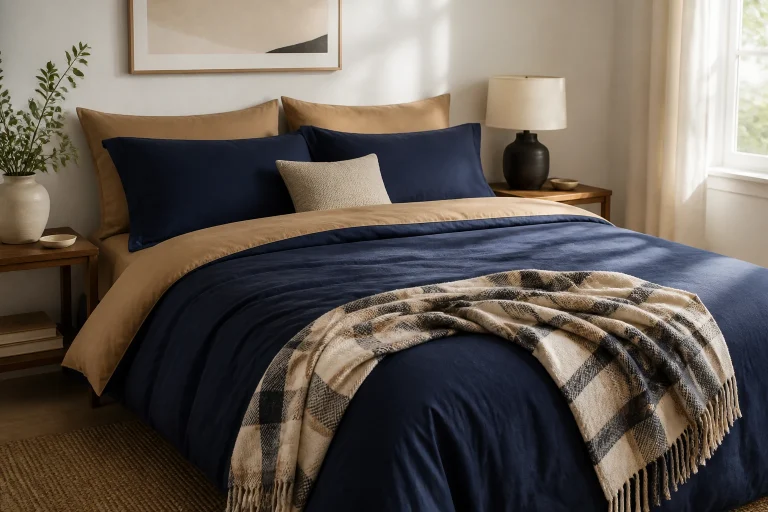
Using a single hue eliminates these harsh horizontal perimeter lines. The ceiling becomes a continuation of the walls, which makes a small room feel endlessly taller. Famous design palettes often use deep heritage navy or rich plum tones for this exact purpose.
You must select the right paint finishes to build structural depth within a single color:
- Flat matte finishes are best for the main walls because they absorb light and hide surface imperfections.
- Semi gloss finishes belong on your baseboards, doors, and architectural trim to reflect light subtly.
- Satin finishes work well on ceilings to bounce light downward without creating a harsh glare.
Once your structural backdrop is saturated, you need a framework to safely layer furniture on top of it.
4 Rules for Curated Maximalism Without the Clutter
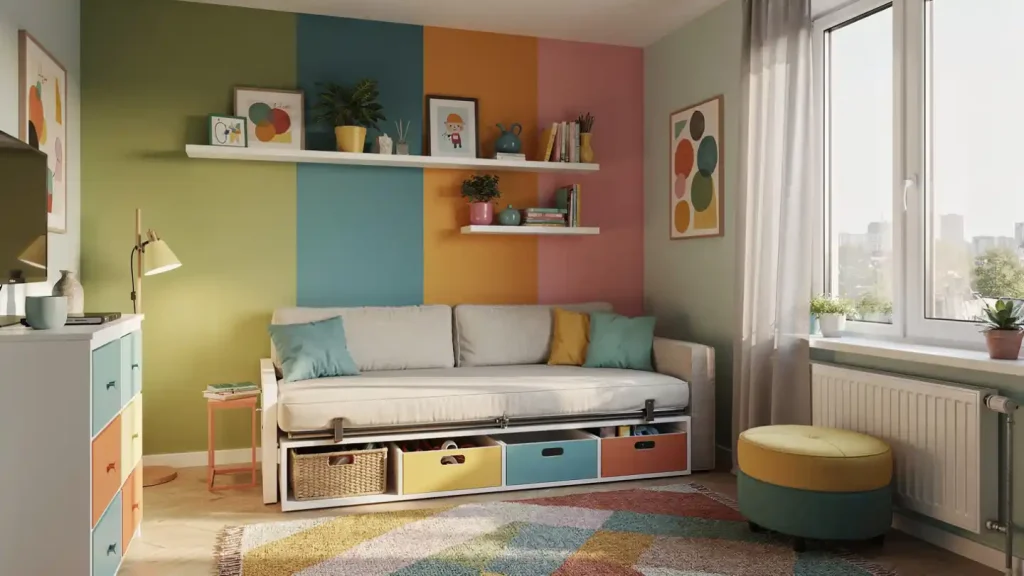
Maximalism in a tight apartment is not an excuse for unchecked hoarding. It is a discipline of curated abundance. You can use bold color palettes for small spaces if you follow a strict layout system.
[3-Color Thread Rule]
60% Base Color (Walls/Ceiling) -> 30% Secondary Color (Furniture) -> 10% Accent Pop (Accessories)
First, use the Three-Color Anchor Thread Rule to tie dynamic items together. Pick one base color for 60 percent of the room, a secondary color for 30 percent, and an accent color for the final 10 percent.
Carrying a continuous accent hue across disparate artwork, pillows, and rugs establishes cohesive harmony.
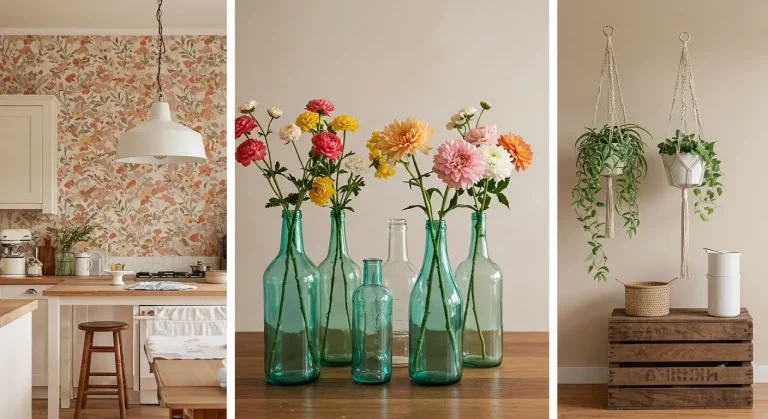
Second, you must learn how to mix patterns successfully. Pair a fine-scale wallpaper stripe with large-scale geometric or botanical textiles. Mixing scales prevents the patterns from competing for your attention.
Third, rely on organic textures to break up flat patches of color. Materials like cork, velvet, boucle, and natural woods give the eyes a place to rest.
If your walls feature a tight, delicate print, your couch should feature a solid, deep texture like velvet to balance the room.
Fourth, keep your walkways completely clear. Saturated rooms feel crowded fast if your physical floor space is blocked by awkward furniture placement.
Rental-Friendly Tactics for Saturated Style
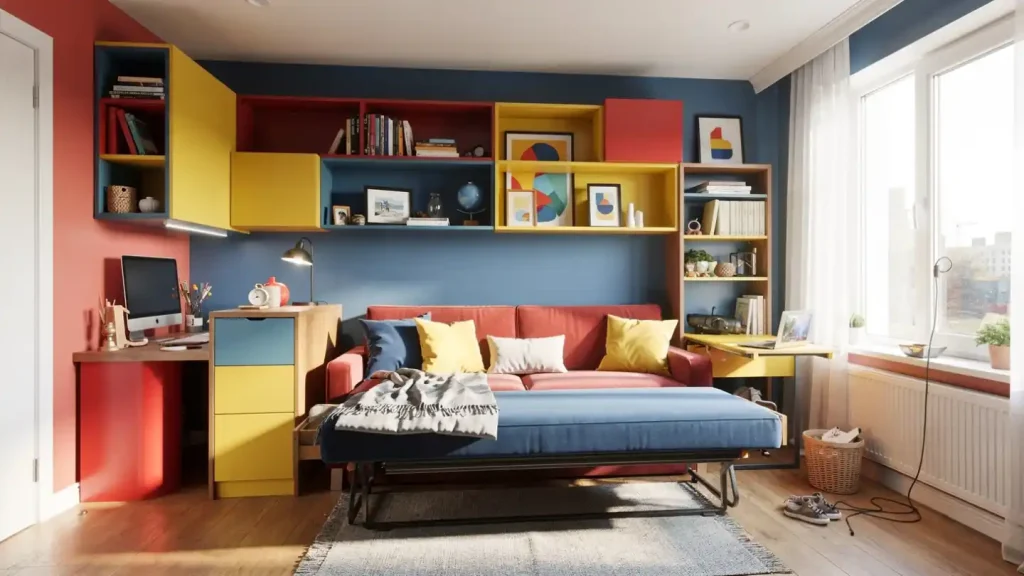
You do not need to own your mortgage to banish boring walls from your living space. Renters can easily execute a vibrant theme using non-permanent design layers.
| Design Layer | Rental Solution | Spatial Benefit |
| Walls | Peel-and-stick fine-scale wallpaper | Adds pattern without risking a security deposit |
| Lighting | Cordless rechargeable LED wall sconces | Creates moody shadows on flat color fields |
| Flooring | Oversized saturated area rugs | Hides ugly rental carpets and anchors furniture |
A rich color theme falls flat without dynamic illumination. Multi-layered cordless lighting must do the heavy lifting where permanent hardwiring is not an option. Place magnetic art lights above colorful gallery walls to create a high-end gallery aesthetic.
Bring in saturated bursts via high-impact accent pieces instead of painting. A single emerald velvet sofa, lacquered trays, or colorful dining chairs can carry the whole theme.
Drive the point home by installing a large mirror directly opposite a window. The mirror reflects your curated environment, which instantly makes a small apartment layout feel twice as deep.
The Ultimate Color Strategy Blueprint
Saturated spaces are not reserved for sprawling mansions. By embracing structural color drenching, keeping your textures deeply layered, and anchoring your choices with clear focal points, a vibrant micro-home can feel incredibly luxe and open.
Stop waiting for a larger floor plan to build your dream home. Pick your foundational hue, put away the sterile beige swatches, and begin your color transformation this weekend.
Can room decor colorful themes work in small apartments? They do, as long as you plan with purpose.