How to Choose Bedding Color (A Decorator’s Guide)

Bedding color can be chosen using the 60-30-10 rule: 60% primary color for the duvet, 30% secondary color for the sheets, and 10% accent color for a throw or pillow. Mixing textures within the same color family, sticking to three colors at most, and picking shades you genuinely like helps create a bedroom that looks stylish and feels comfortable.
Staring at your boring white sheets and wondering how to level up your bedroom game? You’re not alone.
Most of us get overwhelmed when trying to figure out bedding colors that actually work together.
But here’s the thing: there’s a dead-simple formula that interior designers use, and it’s about to make your life so much easier.
The Magic 60-30-10 Formula That Changes Everything
Forget everything you think you know about choosing bedding colors. Interior designer Will
Taylor swears by one foolproof method: the 60-30-10 rule. It sounds fancy, but trust me, it’s ridiculously simple.
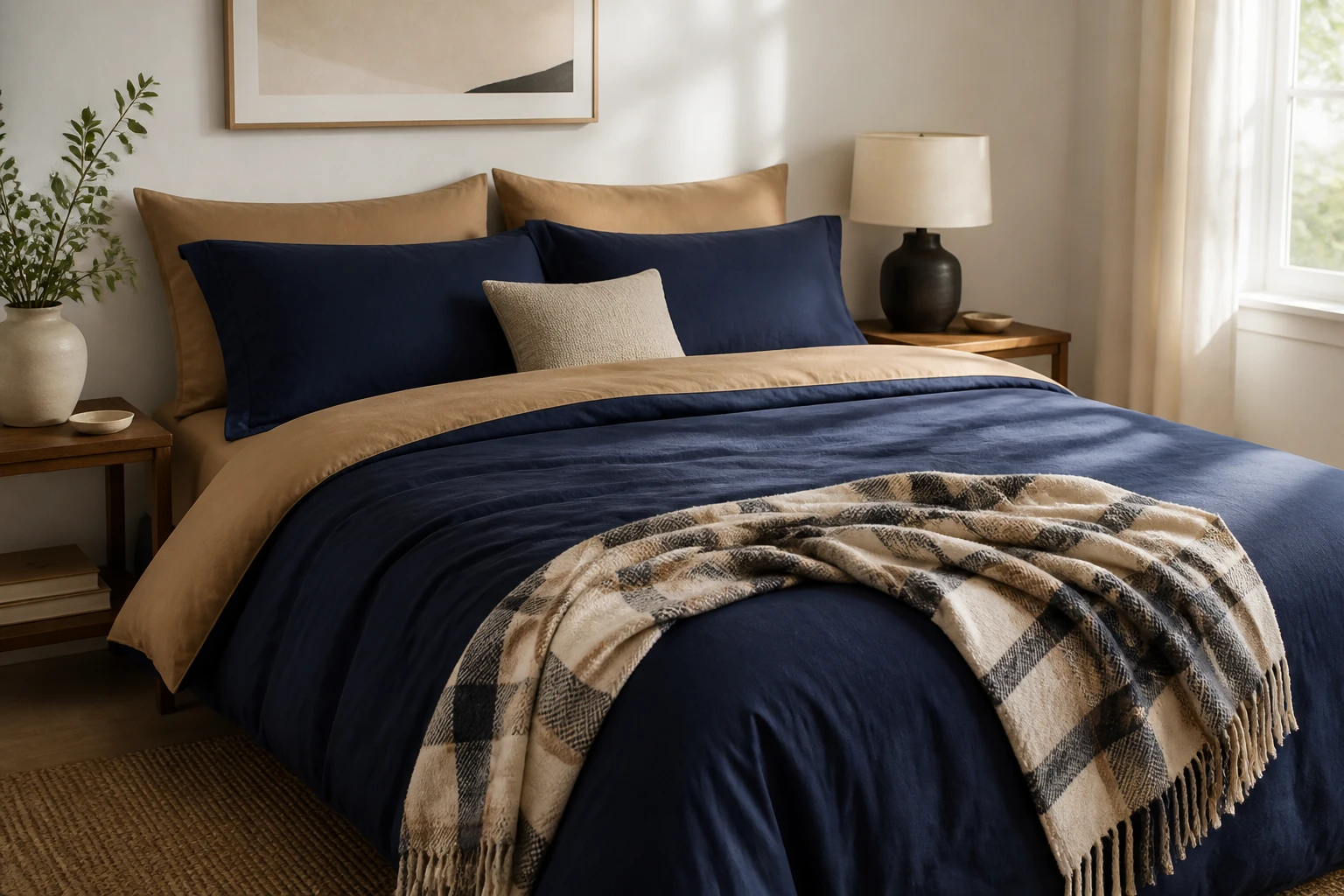
Here’s how it breaks down: 60% of your bedding should be your primary color, which is usually your duvet cover or quilt—basically the biggest thing anyone sees.
Then 30% is your secondary color, typically your sheet set (fitted sheet and top sheet).
Finally, that last 10% is where you get to have some fun with an accent color or pattern, like a throw blanket at the foot of your bed.
Think of it like this: if you go with an indigo duvet cover, pair it with khaki sheets, then throw on a checked blanket at the end. Boom.
You’ve just created a color palette that looks like you hired a designer, but you definitely didn’t.
Going Neutral? This Formula Still Works for You
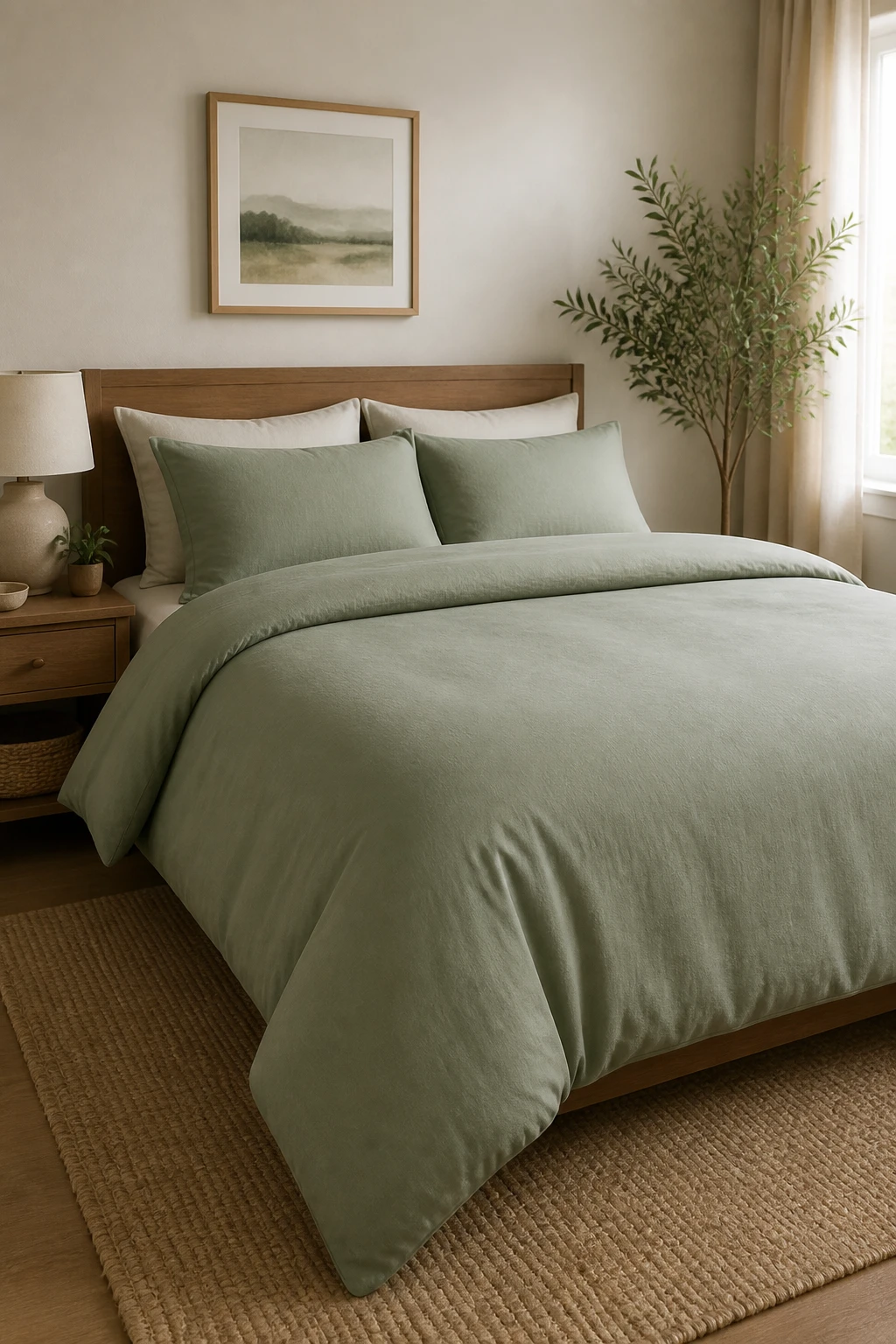
Look, I get it. Maybe you’re one of those all-white-everything people. No judgment here. But if you want to take your neutral bedding from basic to boutique hotel vibes, you can totally use the same 60-30-10 formula.
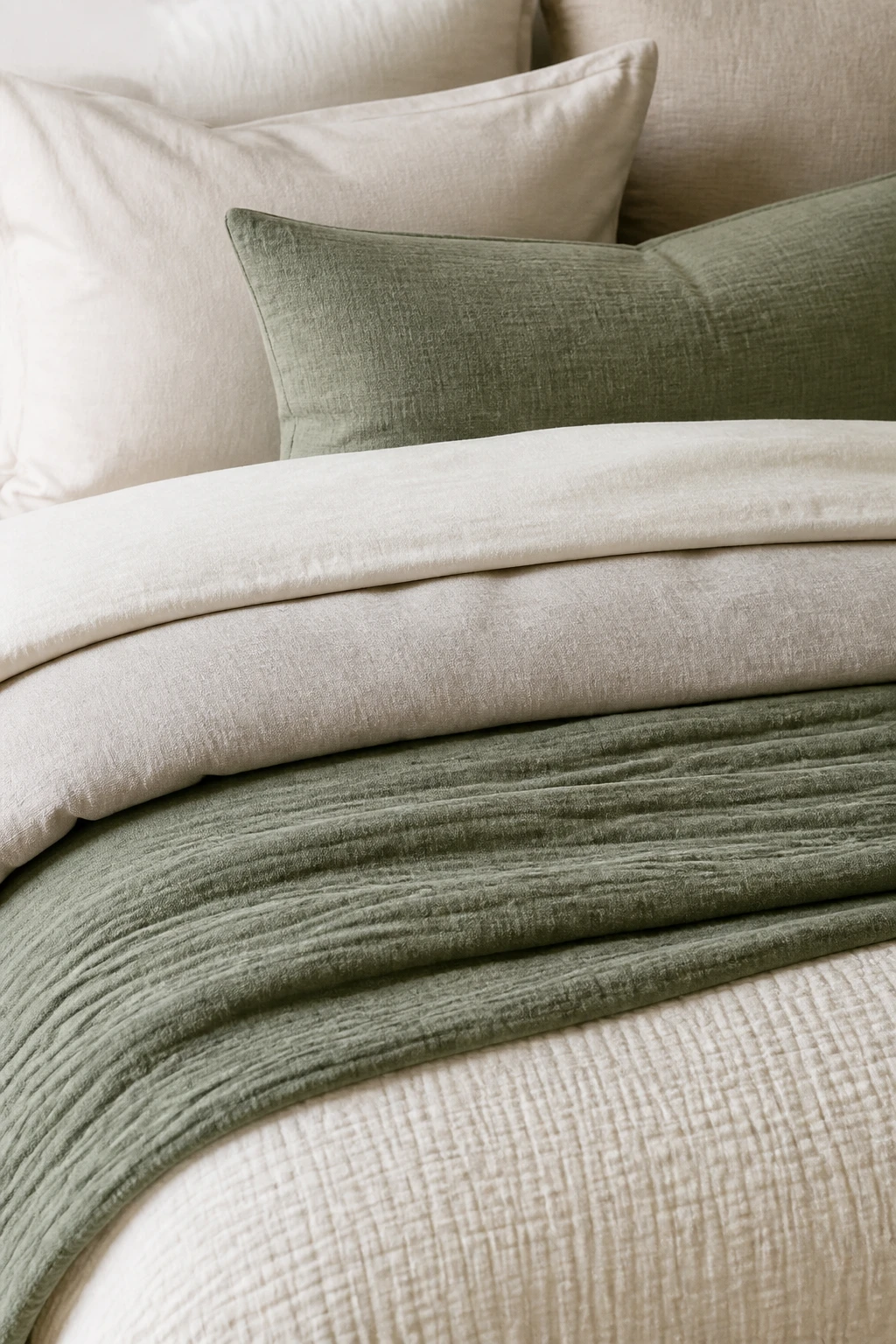
The trick? Pick different shades and textures within the same color family instead of mixing multiple colors. For example, try a toffee-colored satin duvet cover (that’s your 60), keep your white sheets and pillowcases (your 30), then add a textured linen quilt in a complementary neutral (your 10).
The texture is doing all the heavy lifting here. You’re creating visual interest without screaming for attention. It’s the sophisticated approach, and honestly? It looks expensive.
The Minimalist Approach: Less Is Actually More
Not everyone wants seven layers of blankets and throws on their bed.
Some of us just want to sleep, you know? If you prefer a simpler look but still want that designer edge, here’s your move: ditch the patterns and stick to solid colors.
Try pairing a terracotta linen sheet set with a crisp white duvet cover. Just those two elements create a striking, modern look without any fuss.
Too bold for your taste? Swap the terracotta for a soft khaki instead. Same elevated vibe, just dialed back a notch.
The beauty of this approach is that you’re working with fewer pieces, so making your bed takes like thirty seconds. Perfect for those of us who hit snooze one too many times.
The Busy Parent (or Dog Owner) Strategy
Got kids running around? Does your dog think your bed is actually their bed? Yeah, you’re not spending twenty minutes every morning styling decorative pillows. Let’s be real.
For the perpetually busy, go classic with stripes.
A chambray stripe sheet set paired with a simple white linen duvet cover gives you that polished look without the effort.
Stripes are timeless, they hide imperfections better than solids, and they look pulled-together even when you’ve just yanked the covers up in a hurry.
FYI, this is also the approach that ages well. You won’t look at photos in five years and cringe at your bedding choices. Win-win.
The Luxury Hotel Vibe for TV Bingers and Book Lovers
Do you basically live in your bed? Reading until 2 AM or binging entire series in one sitting? Then you deserve a setup that feels like a five-star hotel.
The Secret Is Monochromatic Luxury
Stick to one color family—think charcoals, grays, and blacks—but mix different textures and fabrics.
Pair a window-pane satin sheet set with a heathered cashmere duvet cover. Add a linen throw at the foot of the bed, maybe another two-tone throw for good measure.
Pile on Those Pillows
And here’s where you go all out: stack those pillows like your life depends on it. Euro shams in the back, regular pillows doubled up in front. Yes, you’ll have to move them every night. Yes, it’s worth it for that luxe factor.
This setup also works brilliantly in guest rooms. Your visitors will feel like they’re staying somewhere fancy, even if you’re serving them cereal for breakfast.
Color Combinations That Actually Work
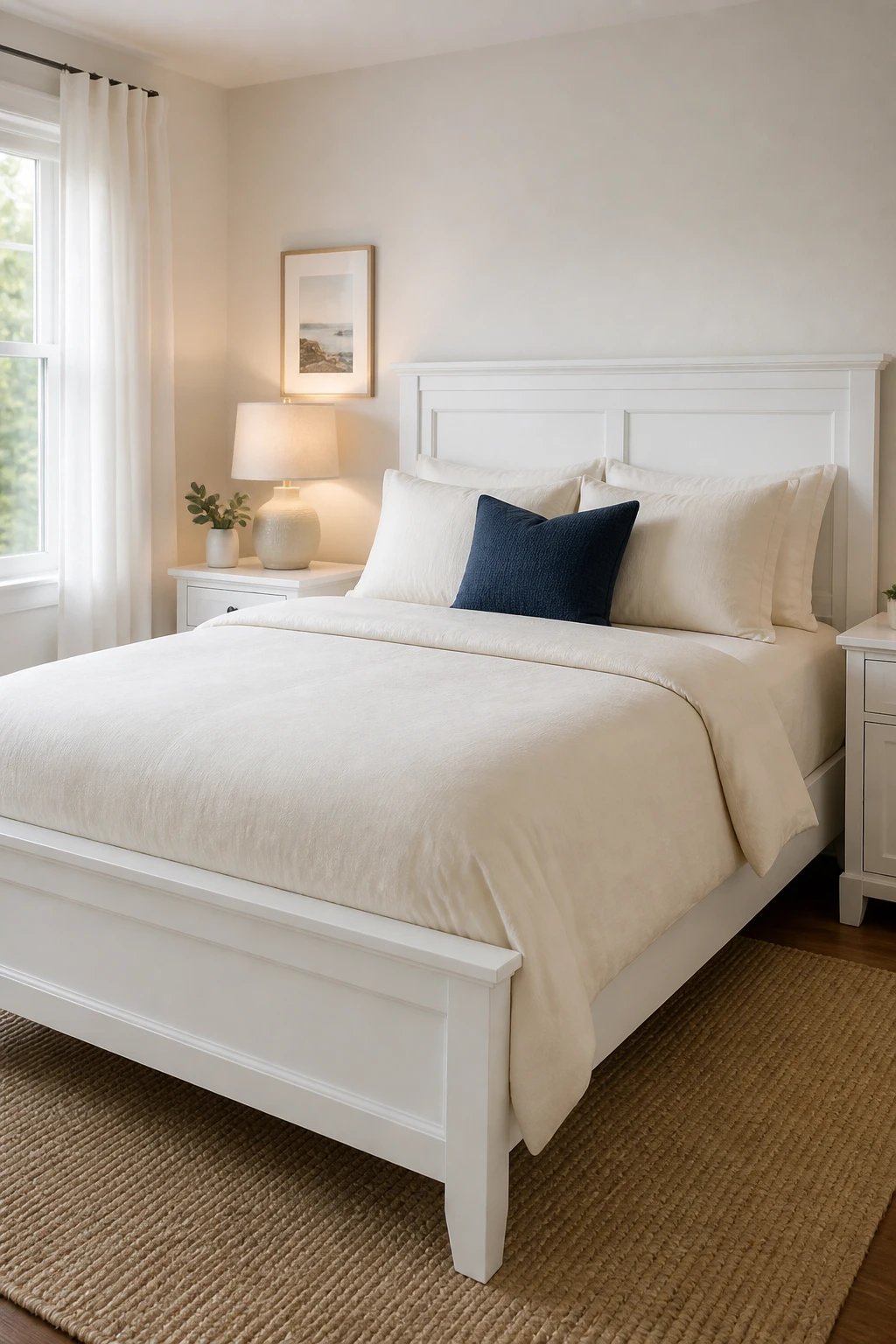
Still feeling stuck on which specific colors to choose? Let me break down some combos that never fail:
- Indigo + Khaki + Checked Pattern: Classic, grounded, masculine-leaning but universally appealing
- Terracotta + White: Warm, modern, Instagram-worthy without trying too hard
- Toffee + White + Diamond Texture: Soft, neutral, sophisticated
- Charcoal + Gray + Black: Dramatic, cozy, perfect for creating that moody bedroom aesthetic
- Khaki + White: Clean, calming, spa-like vibes
The key is choosing colors that make you actually want to crawl into bed at the end of the day. If you hate terracotta, don’t force it just because it’s trendy. Your bedroom should make you smile, not stress you out.
Texture Matters More Than You Think
Here’s something most people overlook: the fabric and texture of your bedding can be just as important as the color.
A luxe satin feels completely different from crisp linen, and that tactile experience changes the whole vibe of your room.
Satin gives you that buttery-soft, hotel-luxury feel. Linen is more relaxed and lived-in, with a natural texture that gets softer over time. Chambray splits the difference with a casual sophistication.
IMO, mixing textures within your color palette is what separates amateur bedding choices from designer-level decisions. Don’t sleep on this detail (pun absolutely intended).
Making Your Choice and Committing to It
At the end of the day, the “perfect” bedding color scheme is the one you’ll actually use and enjoy. Start with the 60-30-10 formula, pick colors that resonate with you, and don’t overthink it.
Your bedroom is the first thing you see in the morning and the last thing you see at night. It should be a space that genuinely makes you happy, not just something that looks good in photos.
Although honestly, if it makes you happy AND looks good in photos? That’s the sweet spot.
Remember, you can always swap things out. Bedding isn’t a tattoo. If you try a color combo and hate it, you can change it.
That’s the beauty of this whole refresh thing—it’s one of the easiest, most affordable ways to transform your space.
Frequently Asked Questions
What’s the easiest bedding color scheme for beginners?
Start with neutrals using the 60-30-10 formula. Try a colored duvet in a soft neutral like khaki or toffee, white sheets, and a textured throw.
This gives you visual interest without the risk of clashing colors. It’s basically impossible to mess up, and you can always add bolder colors later once you’re feeling confident.
How many colors should I use in my bedding?
Stick to three colors maximum using the 60-30-10 rule. Your primary color takes up 60% (usually the duvet), secondary color is 30% (typically sheets), and accent color or pattern is 10% (throws or decorative elements).
This creates a cohesive look without overwhelming the space or making your bed look like a rainbow exploded on it.
Can I mix patterns and colors in my bedding?
Absolutely, but keep it simple. If you’re using a pattern, let it be your 10% accent piece—like a checked or striped throw. Keep your duvet and sheets in solid colors that pull from the pattern.
Mixing multiple patterns takes a more experienced eye, so start with one pattern and build from there as you get comfortable.
What bedding colors make a small bedroom look bigger?
Lighter colors and monochromatic schemes work best for small spaces. Try an all-white or cream setup with different textures, or use light neutrals like soft gray or pale blue.
These colors reflect light and create an airy feeling. Avoid dark, heavy colors on large pieces like your duvet if you’re trying to maximize the sense of space.
How do I choose bedding colors if I have colorful walls?
Let your walls be the star and keep your bedding neutral. If you have bold wall colors, opt for white, cream, gray, or another neutral bedding palette.
You can pull one accent color from your walls for that 10% accent piece, but don’t try to match everything exactly—that actually looks more dated than coordinated.
Should my bedding match my curtains or other bedroom decor?
No, everything doesn’t need to match perfectly—that’s actually pretty outdated. Instead, aim for colors that coordinate or complement each other.
Pull colors from the same family or use the same undertones (all warm or all cool). Your bedroom should feel cohesive, not like everything came from the same box set.