How to Choose Curtains for Bedroom: Fabric, Length & Style Guide

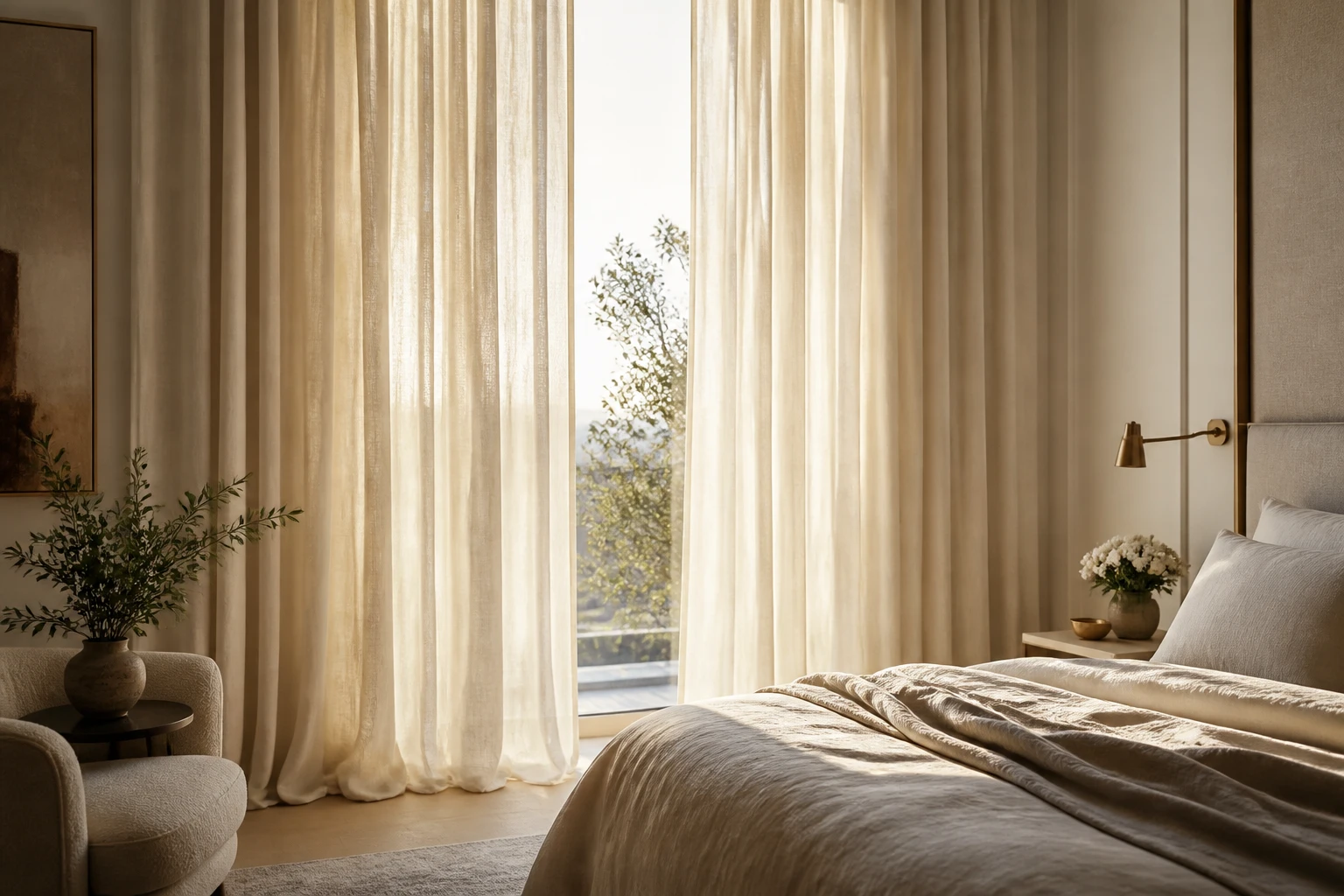
Bedroom curtains work best when made from linen-cotton blend fabric, hung high near the ceiling, and doubled up on panels to look fuller and more expensive. They should lightly skim the floor and stick to neutral colors unless you’re confident coordinating patterns with the rest of the room.
You know what’s wild? Curtains are probably the most overlooked thing in bedroom design, yet they can completely make or break the entire vibe of your space.
Interior designer Karla calls them one of the simplest and most impactful ways to elevate a room, and honestly, she’s not wrong.
Even if you’ve got gorgeous furniture and perfect paint colors, the wrong curtains (or no curtains at all) can make your bedroom look unfinished and, well, kind of sad.
To Curtain or Not to Curtain? That’s the Question
Look, I’m just going to say it: your bedroom probably needs curtains.
Unless you’re going for some ultra-minimalist industrial loft aesthetic, curtains add that crucial softening element that makes a room feel complete and cozy.
Think about it. Your bedroom is full of hard, linear elements—the rectangular window frame, your bed frame, your dresser, maybe some floating shelves.
Everything’s basically a bunch of squares and straight lines. Curtains break up all that geometry and add flow and movement to the space.
This is especially true if you’ve got larger windows. A big, bare window might look sleek in theory, but in practice, it often just looks stark and unfinished.
Curtains give you that designer touch without requiring a design degree.
The Fabric That Makes All the Difference
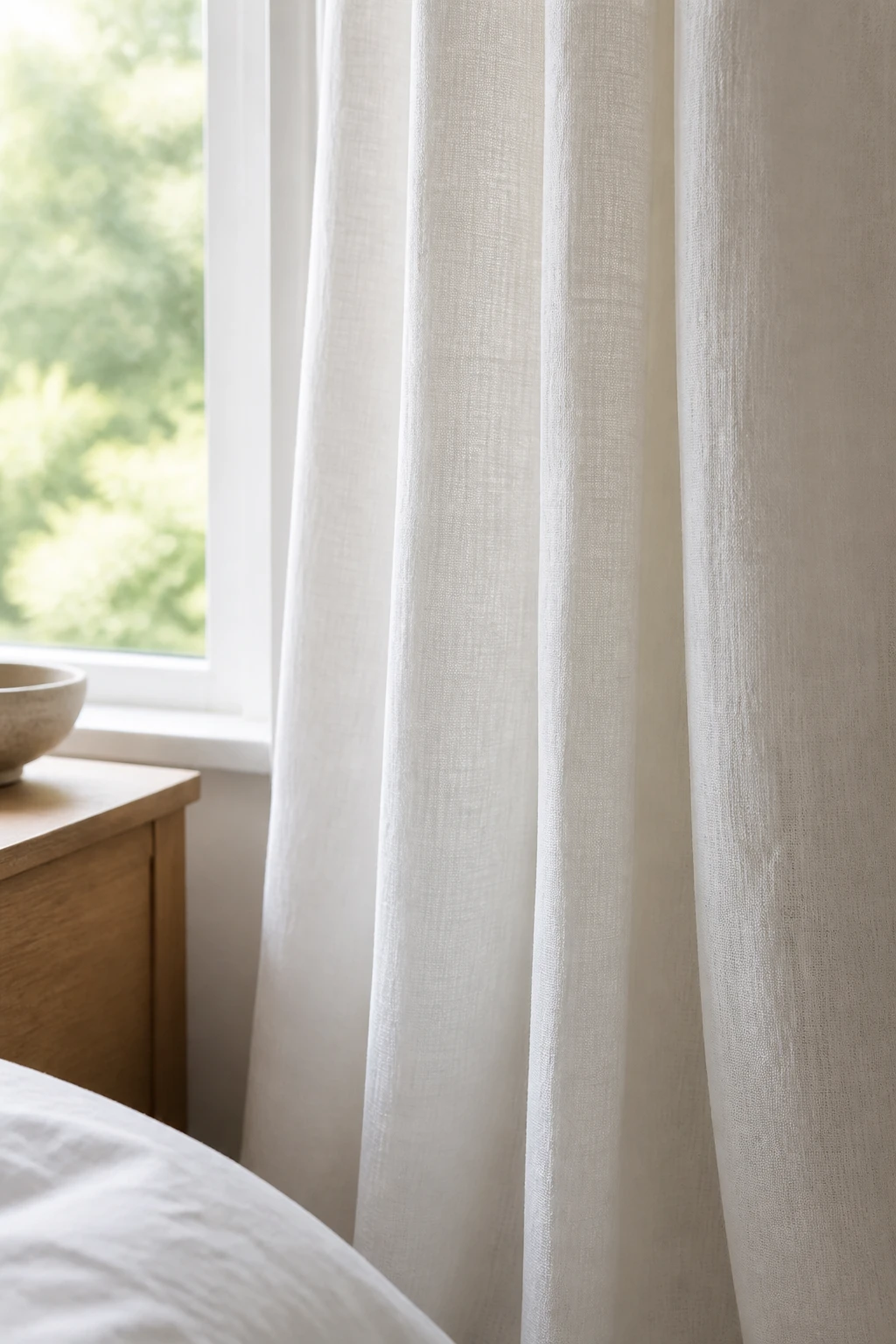
Here’s where things get real: not all curtain fabrics are created equal. If you want that elevated, expensive look without actually spending a fortune, you need to know what to look for.
A linen-cotton blend is your best friend here. This fabric combo gives you the relaxed, lived-in texture of linen with the durability and affordability of cotton.
Plus, it has that natural, effortless drape that screams “I have my life together” without looking too formal or stuffy. The good news? You don’t need to go custom anymore.
Big retailers like Restoration Hardware, Pottery Barn, and West Elm all carry linen-cotton blend curtains now.
You can get that high-end look without the custom price tag—as long as you follow one crucial rule.
The Double Panel Secret
Want to know the insider trick that’ll make your off-the-shelf curtains look custom? Double up on your panels.
Instead of getting one panel per side of your window, get two. This instantly makes your curtains look fuller, more luxurious, and way more expensive than they actually were.
It’s like the design equivalent of adding an extra shot of espresso to your latte—it just makes everything better.
Stop Hanging Your Curtains Wrong (Seriously)
Okay, this is where most people completely mess up, and it drives designers crazy. If you take away only one thing from this article, let it be this: hang your curtain rods HIGH.
I’m talking almost-to-the-ceiling high. Your rod should go either all the way up near the crown molding or right in the middle between your window frame and the ceiling.
This isn’t just some arbitrary design rule—it actually serves a purpose.
Hanging curtains high creates the illusion of taller ceilings and makes your entire room feel more spacious and open. It draws the eye upward and elongates the whole space.
On the flip side, hanging them too low? That just chops up your wall and makes everything feel cramped and shorter.
What If You Have Really High Ceilings?
Fair warning: if you’ve got super high ceilings, you might actually need to go custom to get the right length.
Standard store-bought curtains usually max out around 96 or 108 inches, which might not cut it for those lofty spaces.
But honestly? It’s worth the investment. Custom curtains for high ceilings will still cost less than most furniture pieces and make a bigger visual impact.
The Pattern Predicament
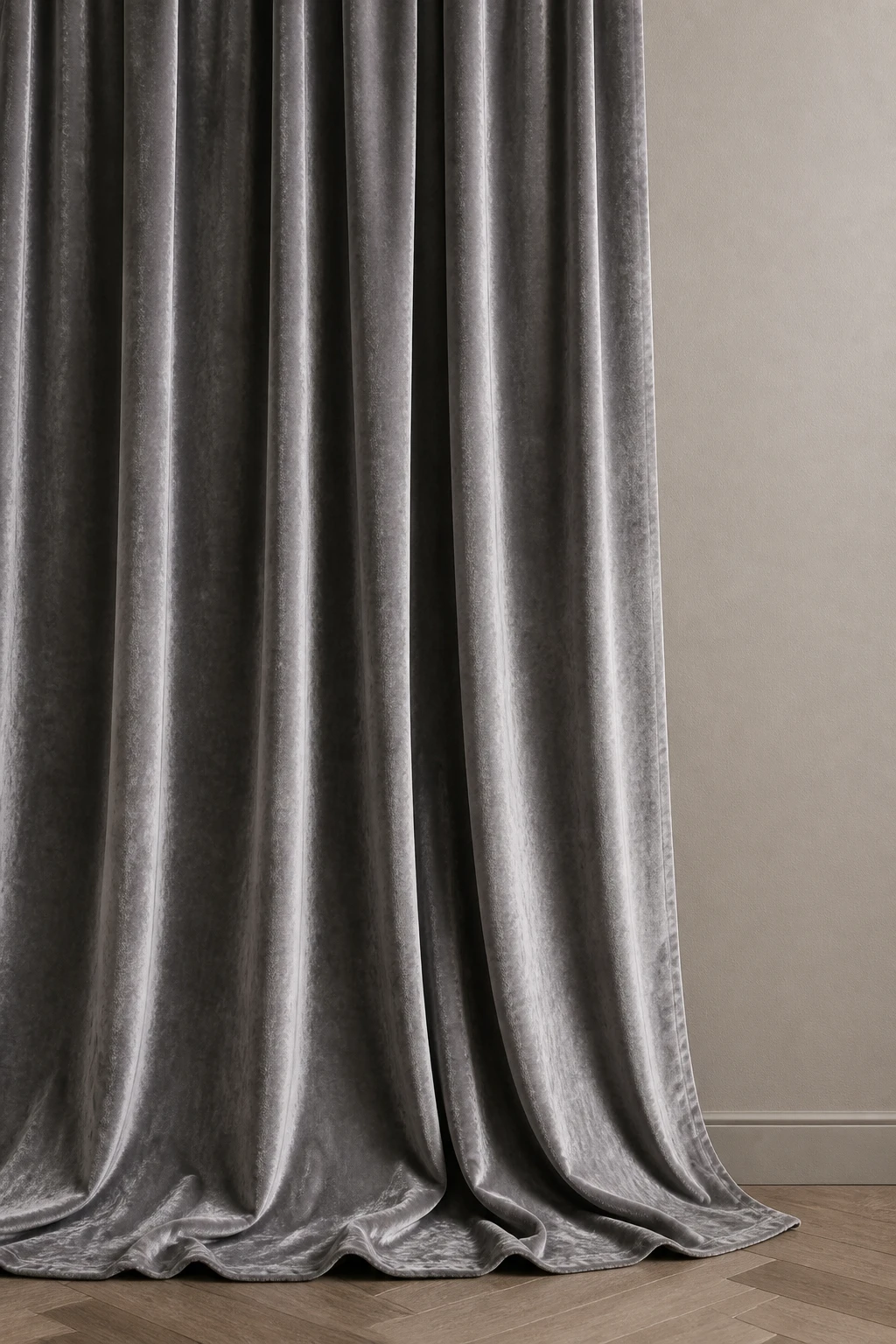
Let me level with you: patterned curtains are tricky. Like, really tricky. Most of the time when you see pattern curtains in someone’s home, they just don’t look right.
Why? Because patterned curtains need to coordinate with the other textiles and colors in your room, and that’s harder than it sounds.
Unless you’ve got a designer helping you or you really know what you’re doing, you’re better off sticking with neutrals.
That said, there are exceptions! In kids’ rooms, patterned curtains can be fun and playful.
And if you have a very neutral bedroom and want to add a pop of color, a patterned curtain can work—but you need to follow through.
How to Make Patterned Curtains Work
If you’re dead set on doing a pattern (and hey, I respect the ambition), here’s the game plan:
- Pull colors from the curtain pattern and repeat them throughout the room in pillows, throws, or artwork
- Make sure at least one or two colors in the pattern already exist in your furniture or bedding
- Keep the rest of the room relatively neutral so the curtains can be the star
- Avoid mixing too many patterns—if your curtains are busy, keep your bedding simple
Think of it like coordinating an outfit. You wouldn’t wear plaid pants with a floral shirt and a striped jacket, right? Same principle applies here.
Let’s Talk Functionality for a Second
Okay, so far we’ve been talking mostly about aesthetics, but curtains also need to, you know, actually work.
If you need blackout capabilities (and in a bedroom, you probably do), you’ve got options.
One smart approach? Combine a roller shade with decorative curtain panels. Install a simple roller shade that pulls down from inside the window frame for light control and privacy.
Then add your pretty linen-cotton curtain panels on either side purely for the aesthetic.
This gives you the best of both worlds: total darkness when you need it and that soft, elevated look that makes your bedroom feel complete. FYI, this is what a lot of designers do in client homes.
The Little Details That Matter

Now for some rapid-fire tips that’ll take your curtains from good to great:
Curtain Rod Choice
Keep it simple.
A basic black rod works with pretty much everything and won’t compete with your curtains.
You can go with other finishes like brass or nickel, but avoid anything too ornate or fussy.
Length is Everything
Your curtains should just barely skim the floor.
Not float above it (that’s the design equivalent of wearing too-short pants), and not puddle in dramatic pools of fabric (unless you’re going for a very specific formal look).
Just a gentle kiss of the floor is perfect.
Hardware Placement
When you’re installing your rod, extend it 4-6 inches beyond each side of your window frame.
This lets you pull the curtains all the way back and actually see out your window when they’re open.
Wrapping It All Up
Choosing curtains for your bedroom doesn’t have to be complicated or expensive. Stick with a neutral linen-cotton blend, double up those panels for fullness, hang them as high as possible, and make sure they just skim the floor.
Follow these rules, and you’ll have curtains that look like you hired a designer.
The beauty of curtains is that they’re one of those rare design elements that deliver maximum impact for relatively minimal investment.
They soften hard lines, add texture and warmth, and make your bedroom feel finished and intentional. Plus, they’re way easier to install than, say, built-in shelving or a statement light fixture.
So yes, to curtain. Definitely to curtain. Your bedroom will thank you.
Frequently Asked Questions
Should I choose patterned or solid curtains for my bedroom?
IMO, stick with solid, neutral curtains unless you really know what you’re doing with patterns. Solid curtains in linen-cotton blends are timeless, versatile, and way easier to style around.
If you do want a pattern, make sure the colors already appear elsewhere in your room, and plan to pull those colors through in your accessories and textiles to tie everything together.
How high should I hang my bedroom curtains?
Hang your curtain rod as close to the ceiling as possible—either right up near the crown molding or halfway between your window frame and the ceiling.
This creates the illusion of taller ceilings and makes your whole room feel more spacious and elevated.
Hanging them too low is one of the most common mistakes people make and it actually makes your room look smaller.
What’s the best curtain length for bedrooms?
Your curtains should just barely skim or “kiss” the floor.
They shouldn’t float several inches above the ground (which looks unfinished) and they generally shouldn’t puddle dramatically on the floor unless you’re going for a very formal, traditional look.
That gentle touch of the floor is the sweet spot that looks polished and intentional.
How can I make inexpensive curtains look more expensive?
The number one trick is to double up on your panels. Instead of buying one panel per side of your window, get two per side.
This creates fullness and makes even basic store-bought curtains look custom and luxurious. Combine this with hanging them high and choosing a linen-cotton blend fabric, and nobody will know you didn’t spend a fortune.
Do I need blackout curtains in my bedroom?
It depends on your sleep preferences and how much light your bedroom gets.
If you need total darkness to sleep well, consider installing a roller shade inside the window frame for blackout functionality, then add decorative curtain panels on the sides for aesthetics.
This gives you the light control you need without sacrificing style.
What color curtains work best in bedrooms?
Neutral colors are your safest bet—think whites, creams, beiges, soft grays, or even muted earth tones. These colors work with virtually any decor style and won’t clash with future design changes.
If you want to add color, choose a shade that already appears in your bedding, artwork, or furniture, and then repeat that color in other accessories around the room to create cohesion.