How to Clean Your Washing Machine

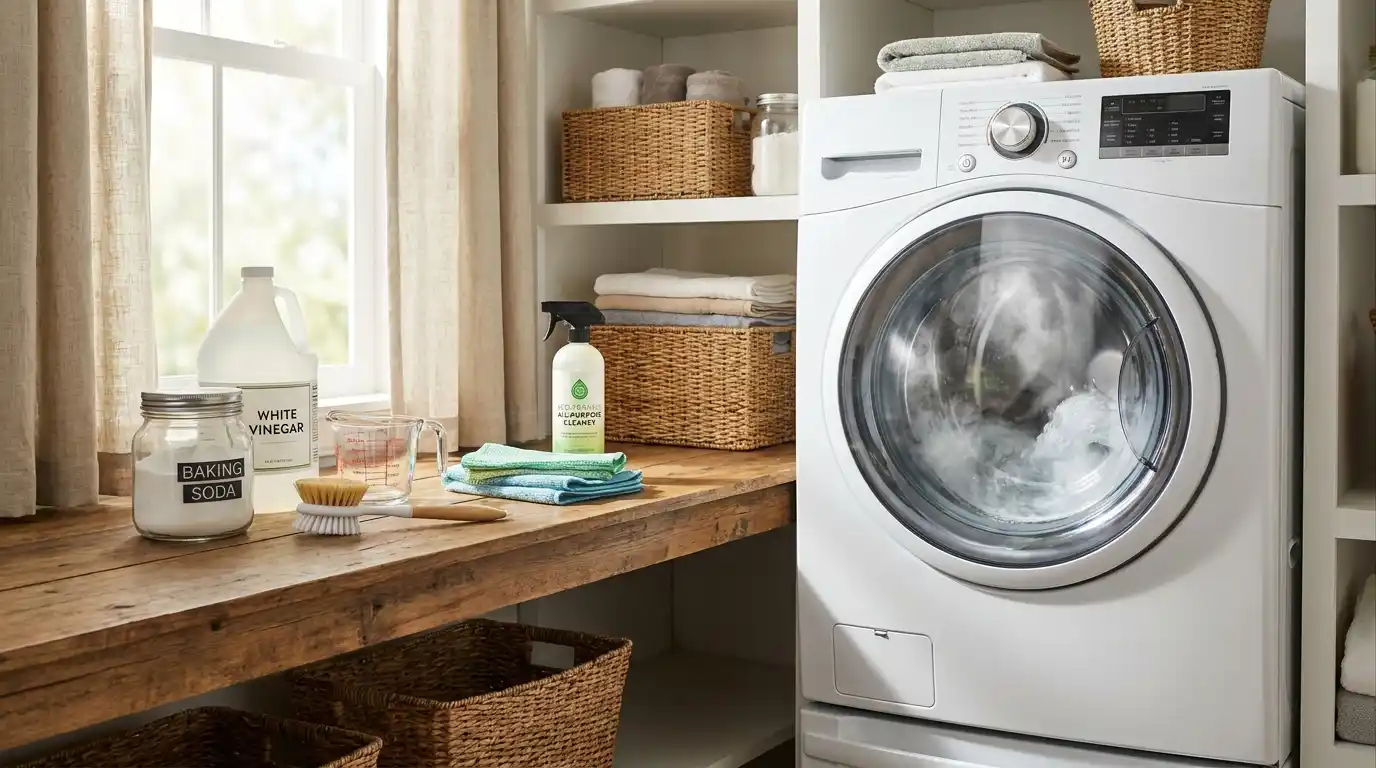
Front load washing machines need regular cleaning to prevent mold, mildew, and musty odors caused by trapped moisture. This involves running monthly clean cycles with vinegar or cleaning tablets, scrubbing the rubber door gasket, cleaning the drain filter, and always leaving the door open after use to allow airflow.
Let’s be honest—when was the last time you actually cleaned your washing machine? If you’re like most people, the answer is probably “umm, never?”
Here’s the thing: that musty smell coming from your frontload washer isn’t just unpleasant, it’s a sign that mold and mildew have moved in rent-free.
Time to evict those unwanted tenants and get your machine sparkling clean again.
Contents
Start With a Deep Clean Cycle
Before you grab a toothbrush and start scrubbing every nook and cranny, you’ll want to let the machine do some heavy lifting first.
Make sure your washer is completely empty—no rogue socks hiding in there—and prepare to run a cleaning cycle.
You’ve got two solid options here: white vinegar or washing machine cleaning tablets. The tablets are super convenient and you can snag a year’s supply on Amazon for pretty cheap.
If you’re going the vinegar route, pour about two cups into the detergent tray, and don’t be shy about adding some to the bleach and softener sections too.
Set your machine to the hottest water setting with a heavy or large load option. You want that drum completely filled with hot water to loosen up all the gunk that’s been accumulating.
Hit start and let the machine work its magic while you grab a coffee.
Time to Get Up Close and Personal With That Rubber Gasket
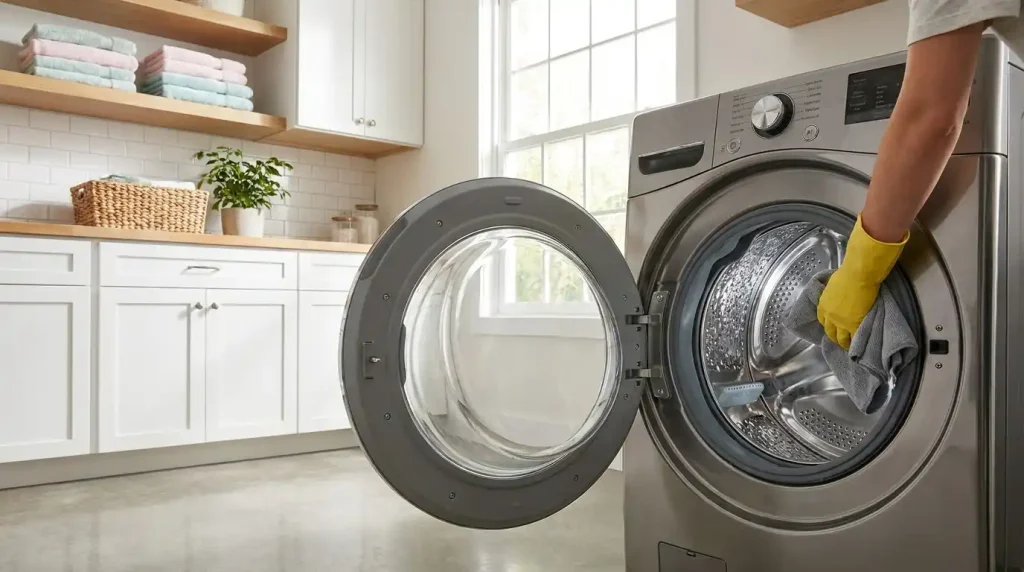
Okay, so the clean cycle just finished. Feeling accomplished? Not so fast. Pull back that rubber door seal and prepare yourself—this is where things get real. Even after that initial clean, you’re probably going to find some gross stuff hiding in those folds.
Your DIY Cleaning Arsenal
Here’s what you’ll need for this mission:
- A microfiber towel (or three)
- An old toothbrush for getting into tight spots
- DIY cleaner: 1 cup vinegar + 1 cup water + 1 teaspoon Dawn dish soap
Spray down the entire gasket area generously with your DIY mix. Then gently pull back those rubber folds and start scrubbing with your toothbrush. Don’t be alarmed if you see the grime lifting immediately—that’s exactly what we want.
The Scrub-Spray-Wipe Repeat Method
This part can take a minute, especially if you’ve been neglecting your machine (no judgment). Just keep at it: spray, let it sit for a bit, scrub with the toothbrush, then wipe with a clean microfiber towel.
Repeat until everything looks clean. Those nooks and crannies in the seal are mold’s favorite hiding spots, so really get in there.
Don’t Forget the Secret Trap Door
Plot twist: there’s a hidden compartment you probably didn’t even know existed. Look down at the bottom front of your machine—see that little trap door? Yeah, that one. Time to investigate what’s lurking behind door number one.
Pop open that panel and you’ll find a small drain hose with a plug. Fair warning: this can get messy, so put down a towel and grab a shallow dish before you pull that plug.
Sometimes water comes gushing out, and sometimes… well, let’s just say it’s not always pretty.
Cleaning the Filter
Once you’ve drained the excess water, look closely and you’ll spot a filter. Turn it counterclockwise to remove it—more water will probably spill out, which is why those towels are clutch right now.
This filter catches all sorts of delightful things: lint, hair, mystery gunk, and if you’re lucky, loose change.
Rinse the filter thoroughly under running water to remove the obvious gunk. Then spray it down with your vinegar mix and give it a good scrub with your trusty toothbrush.
Make sure you get all the buildup off before reinstalling it.
The Detergent Drawer Deserves Love Too
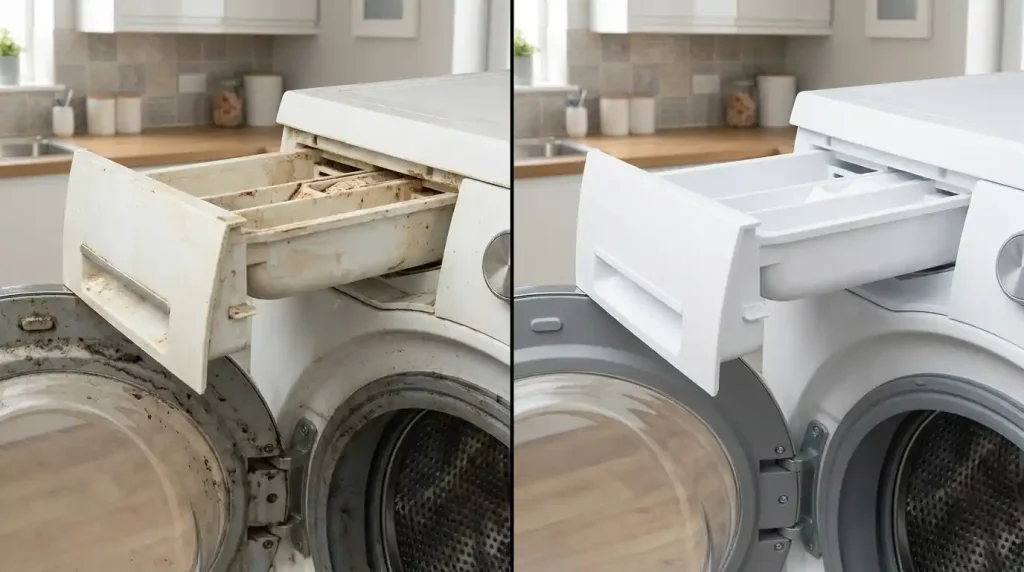
While you’ve got your cleaning supplies out, pull out that detergent drawer. Most machines have a little button or tab you push down to release it completely.
This thing is probably way grosser than you realized, with soap scum and residue in every corner.
Take the whole drawer apart if possible—there are usually multiple components that separate. Rinse everything first, then spray generously with your DIY cleaner.
A Scrub Daddy or similar sponge works great here for getting into all those angles. The vinegar breaks down the buildup while the Dawn cuts through any greasy residue.
Don’t forget to clean the actual chute where the drawer sits! Spray it down and use your toothbrush to scrub the inside before popping that freshly cleaned drawer back in.
Tackling Stubborn Stains and Discoloration
Sometimes even after all that scrubbing, you’ll still have some discolored spots on the rubber gasket that just won’t budge. This is where the big guns come in.
Grab a mold and mildew stain remover (products like Sūgoi work well—it’s got a gel-like consistency).
Apply it directly to the stained areas, work it in with gloved hands, and then walk away. Seriously, this stuff needs time—at least 3 to 5 hours to work its magic.
After the waiting period, rinse thoroughly and wipe clean. If some staining remains, just repeat the process. Patience is key here.
Prevention: Because Future You Will Thank You
Now that your machine is pristine, let’s keep it that way. A little maintenance goes a long way in preventing that musty smell and mold growth from returning.
After Every Wash
Get into the habit of wiping down the rubber gasket with a towel after each use. This removes moisture that would otherwise create a perfect breeding ground for mold. Takes 30 seconds, max.
Keep That Door Open
Always leave your washer door cracked open between uses. You can even get a little magnet to prop it open if you want. This allows airflow through the drum so everything dries out properly instead of staying damp and funky.
Monthly Maintenance
Run a cleaning cycle with vinegar or a cleaning tablet at least once a month. Think of it as preventative medicine for your washing machine. Way easier than dealing with a full-blown mold situation later, trust me.
Wrapping It Up
Cleaning your washing machine might not be the most glamorous chore, but it’s definitely one of the most satisfying.
Once you’ve conquered the mold, tackled the mystery gunk in the filter, and restored your machine to its former glory, your clothes will actually come out smelling fresh instead of musty.
The best part? Now that you know the routine, keeping it clean is way easier than letting it get gross again.
A quick wipe-down after each use, that door propped open, and a monthly cleaning cycle—that’s all it takes. Your nose (and your clothes) will thank you.
Frequently Asked Questions
How often should I deep clean my frontload washing machine?
You should run a cleaning cycle monthly, but do a full deep clean (including scrubbing the gasket and cleaning the filter) every 2-3 months. If you notice any musty smells developing, don’t wait—tackle it immediately.
Can I use bleach instead of vinegar to clean my washing machine?
You can, but vinegar is generally safer for the rubber components and just as effective. If you do use bleach, never mix it with vinegar or any other cleaners, and make sure to run an extra rinse cycle afterward.
Why does my frontload washer smell worse than my old top-loader?
Frontload washers use less water and have that rubber gasket seal, which creates more opportunities for moisture to get trapped. The horizontal drum design also means water doesn’t completely drain out like it does in top-loaders. This makes regular cleaning and leaving the door open even more important.
Is it normal to find water in the filter compartment?
Yep, totally normal. Some water stays trapped in that area, which is exactly why you need to clean it regularly. That standing water can get pretty gnarly if left unchecked.
What if I can’t find the filter on my washing machine?
Most frontload washers have the filter behind a small access panel at the bottom front, but locations vary by brand. Check your owner’s manual or search for your specific model online—there are tons of YouTube videos showing exactly where to find it.
Can I use essential oils to make my washer smell better?
While essential oils smell nice, they don’t actually clean or kill mold. Stick with vinegar or proper cleaning products for the actual cleaning, and the fresh smell will come naturally from having a genuinely clean machine.